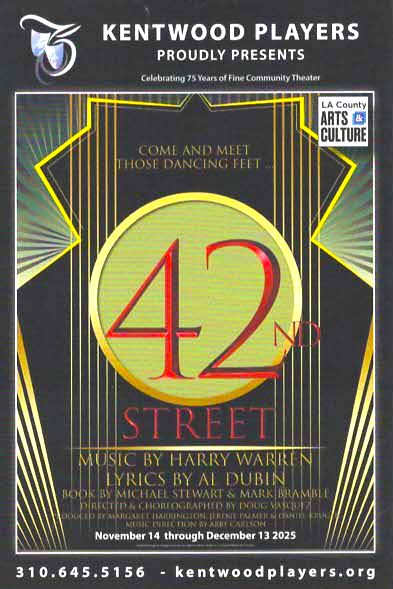
( www.kentwoodplayers.org )
“Come on along and listen to, the lullaby of Broadway!”—and there is no better incarnation of this than “42nd Street”, the 1980 Tony Award-winning Best Musical classic adaptation of Busby Berkeley’s equally iconic 1933 watershed big-screen musical. For nearly a century, this dazzling story has captured audiences with its energetic dance numbers, memorable songs, and a heartfelt celebration of both the excitement and the hardships of Broadway. Now, the Kentwood Players bring “42nd Street” to The Westchester Playhouse in Los Angeles, directed and choreographed by Doug Vasquez with musical direction by Abby Carlson, (who also serves as sound engineer.) As the company proudly celebrates its 75th anniversary of quality entertainment, this production delivers exactly what musical theater should be: dazzling, heartfelt, and emblematic of the Broadway tradition. On this particularly esteemed occasion, it can be honestly proclaimed that what the Kentwood Players are offering is nothing less than the quintessential musical theater experience! So head out, sit back, tap your feet, and watch them “go into their dance!”
A glittering valentine to the Great White Way: Broadway itself, “42ND Street” is a story born in the shadows of the Great Depression, yet it shimmers with irrepressible hope, humor, and the sheer joy of performance. At its heart is Peggy Sawyer, a young dreamer whose journey from chorus line to center stage reminds us that perseverance and passion can turn even the darkest times into dazzling triumphs. From the cheeky hilarity of “Shuffle Off to Buffalo” to the thunderous spectacle of “We’re In The Money”, Act One sweeps us into the intoxicating world of rehearsals for a show-within-a-show called, “Pretty Lady”. After intermission, numbers like “Sunny Side of Every Situation” and the timeless “Lullaby of Broadway” carry us deeper into the kaleidoscope of tap, song, and spirit that defines this musical. Jammed to the rafters with a score loaded with iconic songs featuring the Music of Harry Warren each perfectly complimented by the Lyrics by Al Dubin, with a Book adapted expertly from the film’s screen play by Michael Stewart & Mark Bramble, and enlivened by Original Dances by Gower Champion==much of which have been facilely reconceived, if not always solid duplication, but always a certainly intimated tribute throughout this version by Director/Choreographer Vasquez.
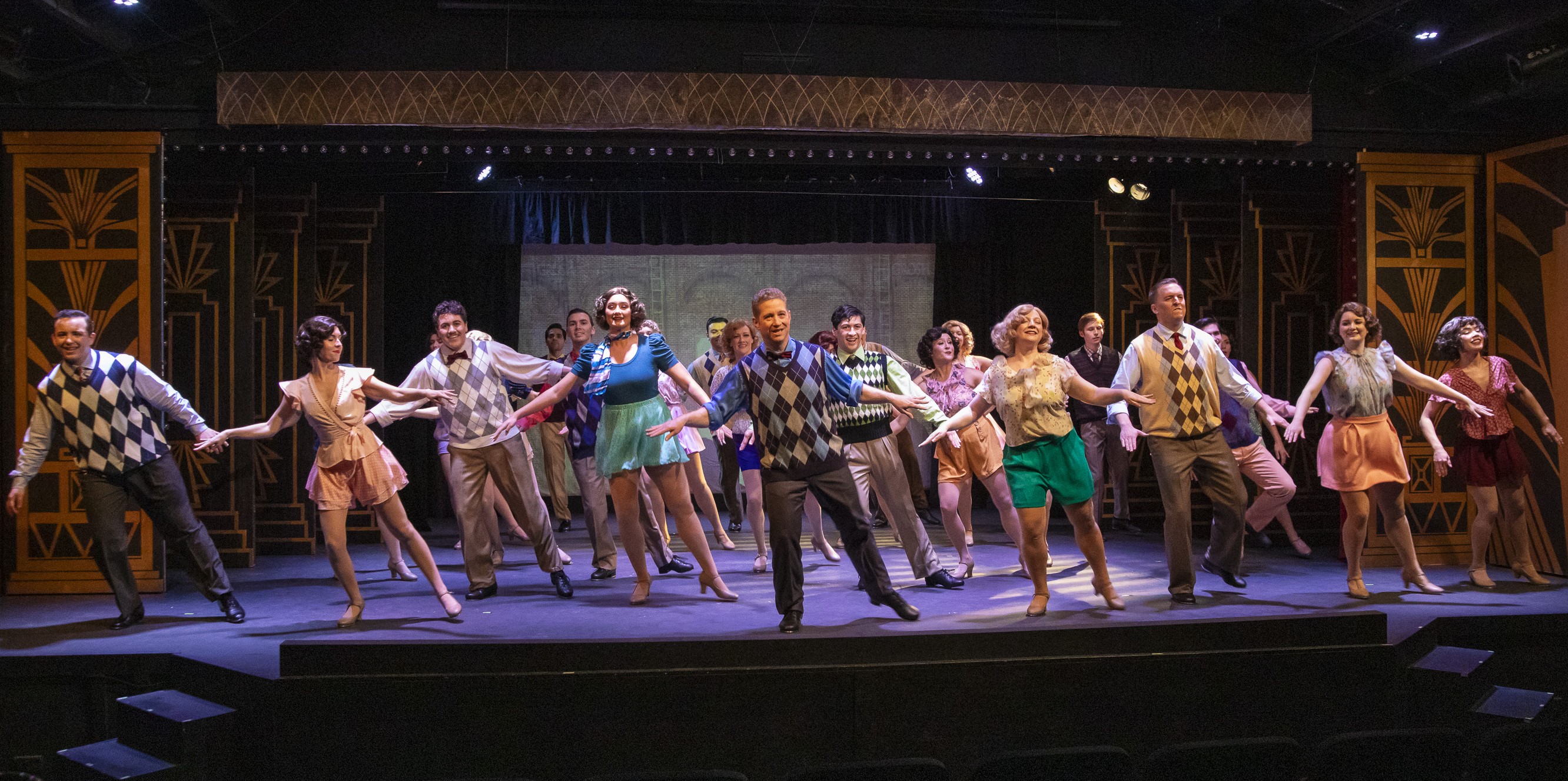
And it is Mr. Vasquez who works terpsichorean miracles on the Westchester stage—working with a modest playing area, and making it appear to be double—no, triple its actual size. Likewise, if you’re a regular patron at “The Westchester Playhouse, you’re bound to recognize more than a few familiar faces and , well, feet…) in the opening extravaganza: “The Audition” wherein the entire cast appear vying for a role in ‘Impresario’ “Julian Marsh’s: next magnum opus “Pretty Lady”. It’s a dazzling thing to see and sets us up right away to know what we’re in for. THIS IS A MAGNIFICENT combination they’re all carrying out—in unison! If you’ve got even the slightest inkling as to what such moves take to perfect, you’ll appreciate just what an accomplishment these dancers are achieving (YOWZA!!!!) It’s also no exaggeration to say that this Cast is practically a textbook definition of enthusiasm and talent! However, perhaps one of the most awesome aspects of the casting is how the company is genuinely multi-aged, meaning there are a number of generations represented –and all are well matched in the talented department as well as eye-popping and adept dancing-wise—a perfect example of how dance in general and “Tap” in particular—doesn’t have a “cut off” in the Age department. You can go as far as your abilities (and well, practice) will let you.
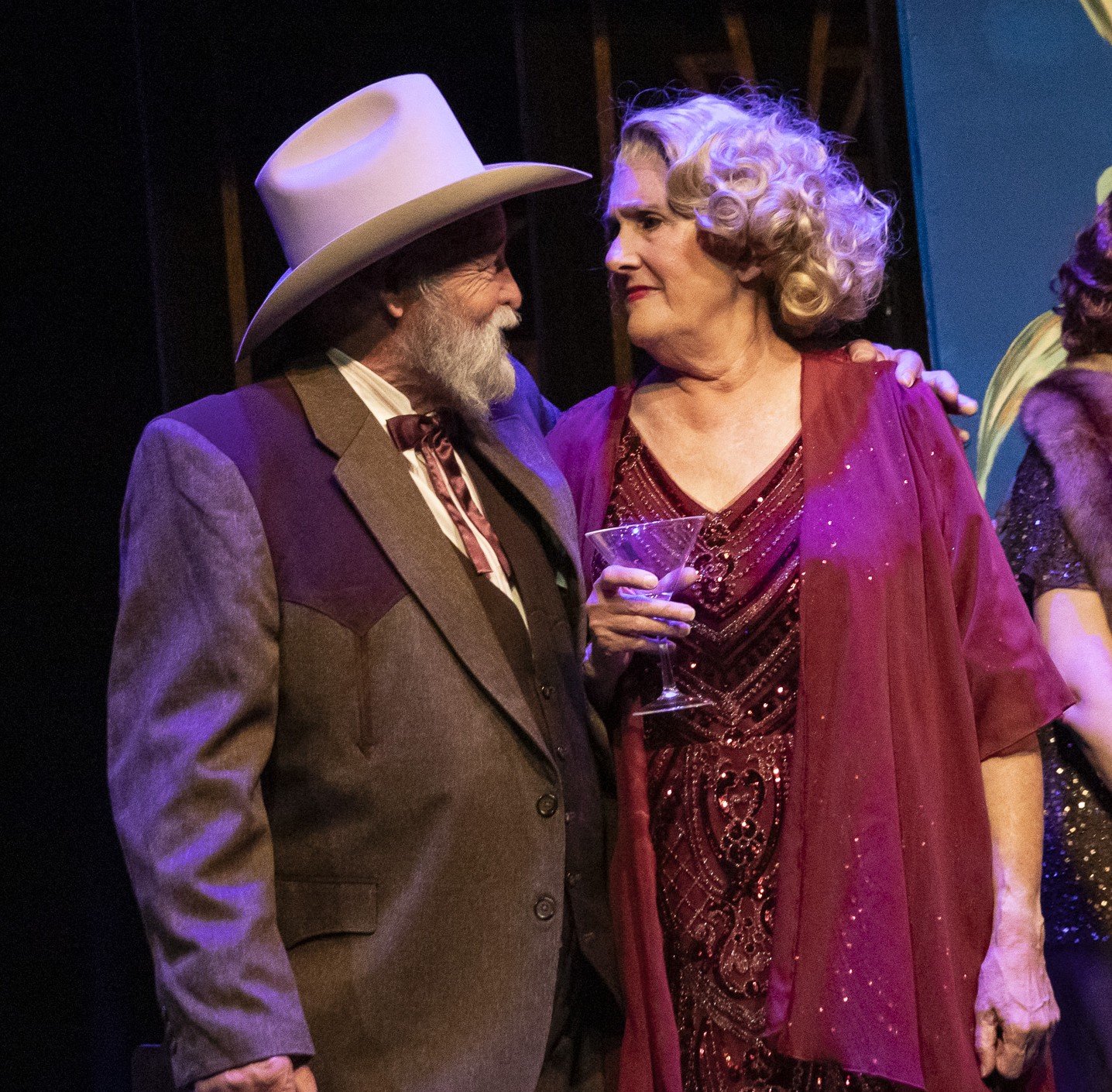
“Lullaby Of Broadway” is pure, unfiltered fun. Ironically, many playgoers don’t realize that this number wasn’t part of the original 1933 film. It was Gower Champion—the stage production’s visionary director, developer, and driving force—who recognized the impact it could have on Broadway audiences. Happily, his instinct was spot‑on: the addition of this playful, tap‑filled showstopper not only delighted crowds but became one of the musical’s most memorable highlights. To simply say Champion was ‘right’ would be a far too serious understatement; his insight transformed a charming novelty into a certified Broadway classic. At the same time, “We’re In The Money” too, is the absolute showstopper of Act One. The former placed toward the close of Act One while the latter is just prior to the show-within-a-show that rockets what we’re undertaking to the thunderous titular climax that closes this entire theatrical adventure, each is a fabulously fashioned and fine-tuned endeavor.

At the center of all the action is Annie Metcalfe as “Peggy Sawyer” and she lives up to the challenge of Lead Character and then some. Pretty, charismatic, with exceptional vocal talent–and oh, can this girl dance! It’s always exciting when you get to witness just the right performer cast in just the right role for them, and that’s precisely what seems to have happened here. Starting with her brief, shy little snippet of “Young and Healthy” which serves as her ‘audition’ of sorts for “Pretty Lady” on to her ‘more substantial’ part in “Go Into Your Dance” (—sung as she strolls with several of the already cast company members who have invited her to lunch,) somewhere in between Ms. Metcalfe manages to reveal the real depth and charm of her absolutely lovely (and powerful) performing abilities. Plus, that particular number gives rise to plenty of great belly laughs too! (Melding fancy footwork along with genuine comedy or physical slapstick isn’t always the easiest—‘timing’ is a major factor—but here, all of the ladies involved don’t miss a trick or a step and it’s totally delightful to see!) Once cast, Ms. Metcalfe’s “Peggy” is eager and maybe a little cautious in her new ‘role’ bit she isn’t naïve or fainthearted—just the opposite, and this makes just root for her twofold…threefold…fourfold…whateverfold…take your pick!.
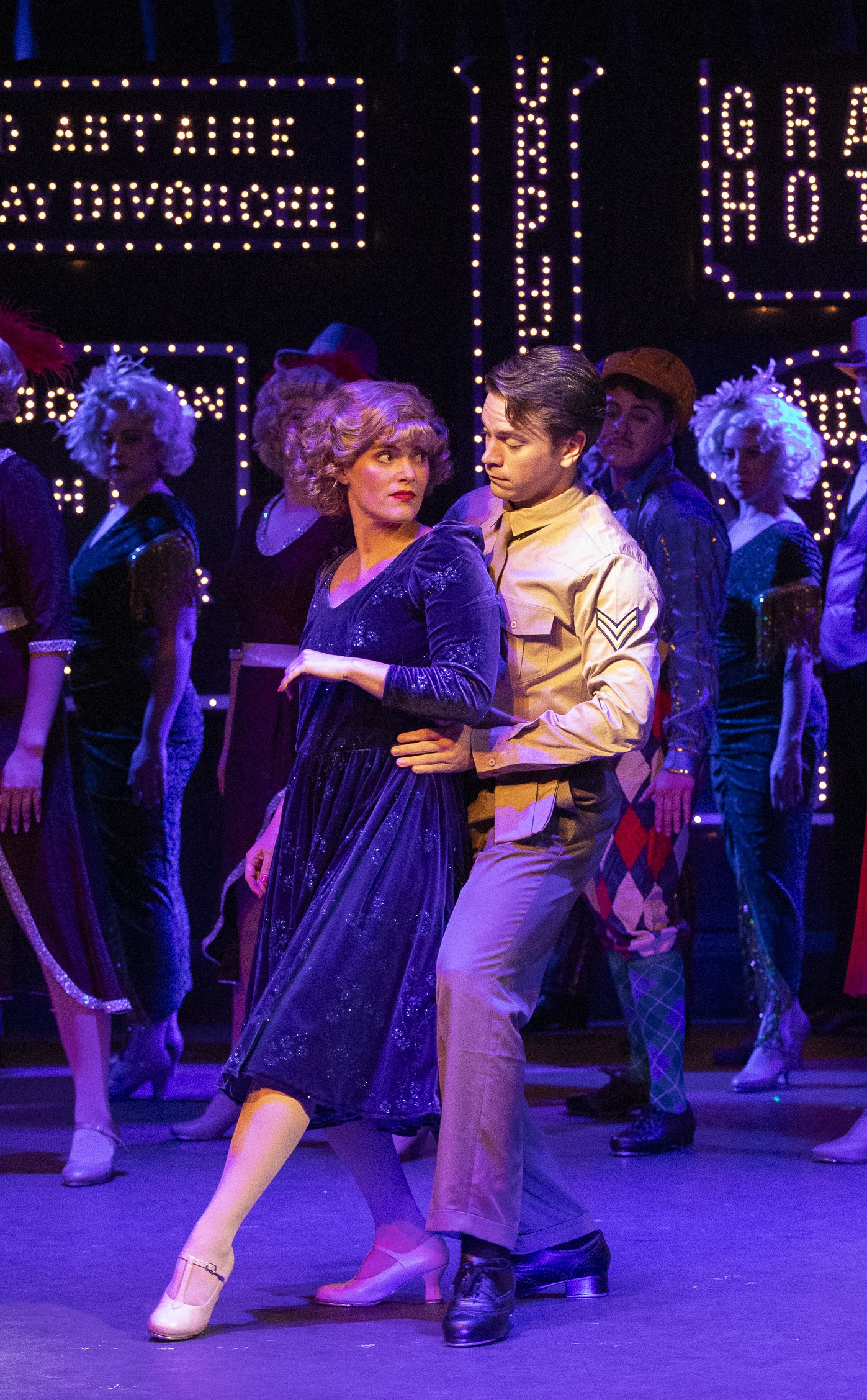
Every ingénue leading lady needs her Juvenile leading man and our “Peggy” has found herself a winner in young Charles Keppler as “Billy Lawler”. Keppler is loaded with the kind of dashing good looks that could cause many a young miss to turn her head, and a strong singing talent to back it up–as he verifies, early on with his parts in “Young & Healthy” and later in the bigger “extravaganzas” like “We’re In The Money”. He does (yet another) impressive job when He leads the jivey “Dames”(ostensibly a song of ‘encouragement’ for the rest of the cast who are feeling down.) Uniquely, as that particular juncture soon evolves into (yet another) opportunity for him to unabashedly impress by demonstrating some really kick-ass hoofin’ they all throw in a bit of more contemporary be-bop moves all swathed in some outstanding costumes all laden in pink (um, think WOW!) and when the full cast join in—watch out! But that’s the other striking aspect of this show—one eye-popping musical number after the next. And just like in the original film (as many over the years always though it should have been) HE ends up walking away with our girl Peggy!
Apropos of “Dames”: Speaking with Director/Choreographer Doug Vasquez, he provides some unique insights as to what impression he and the cast were going for with this one and what makes it standout. “The Dames Number is broken down into 4 Parts” he acknowledges before addressing its distinctive color-scheme. Next, he reveals there is a part he refers to as “The ‘Rehearsal Dames’ which features “Billy” and the men of the ensemble, which is quickly followed by the ‘Beauty School Dames’ “Which featured 16 Women in matching Pink Dresses,” he describes”, adding “Part 3 has Billy & 10 Ensemble Men re-enter in Tailcoats with Yellow sequin vests & matching bow-ties.” These “Gentlemen Dames” are soon joined by sixteen ensemble ladies, each elegantly dressed in stunning gowns. And if all the utterly lavish couture they’re each wearing weren’t enough, they all engage in some fancy footwork that would seriously turn the likes of Astaire or Cohan the same flamboyant shade of green some of the dresses and topcoats used here are. Perhaps most distinctive aspect to this intermezzo though, is that one number had its very own costumer (or “Dress Specialist” as they call her in the Program) to handle all of the specialty attire. And you know what? She seriously deserves a shout out all her own—so consider this a special Web-Ovation: Kim Peterson! Hats Off to you and the brilliant formal apparel you chose here!

Jon Sparks also proves fittingly ‘larger than life as the ‘Legendary” Showman and “Can do no wrong” Producer, “Julian Marsh”. Gifted with a charismatic stage presence and a potent voice to back it up, his ‘take’ on “Marsh” beams during his ‘Key” moment during the iconic “Lullaby Of Broadway”–which also contains some incredible choreography. Count this one THE post intermission/pre-titular climax/Crowd Pleaser—for him and everyone involved (–and that’s worth noting too: everyone IS involved!!!) THIS is the kind of theatrical musical experience you DON’T forget–for all the right reasons! As his would-be “Star”, Kim Peterson brings striking depth to “Dorothy Brock”, transforming what could be a stock diva role into a character of arrogance, vulnerability, and ultimately, genuine humanity. It would be too easy to simply write her off as just another over the top arrogant “Diva”. Yes, she plays that part but pay more attention. She also betrays a few moments of sincere humanity and vulnerability. Ms. Brock equally excels delivering several really standout moments which elevate the score with unexpected charm. Her duet with Ms. Metcalfe, “About a Quarter to Nine”, becomes a surprise highlight late in the show, balancing toughness with tenderness, hence turning melodrama into moments of relatability, while earlier in Act One, she captivates with the torch song “I Know Now”–a number that reveals her regret over choosing a “financial backer” at the expense of her true love. More importantly though, Ms. Peterson hands us over a real “Person” not a “Personality”. Early on her “Shadow Waltz”, staged behind a backlit scrim with playful slapstick touches, shows both comic and dramatic skill. (“Not bad, Miss Brock; Not bad” Julian quips stoically after her presentation.)
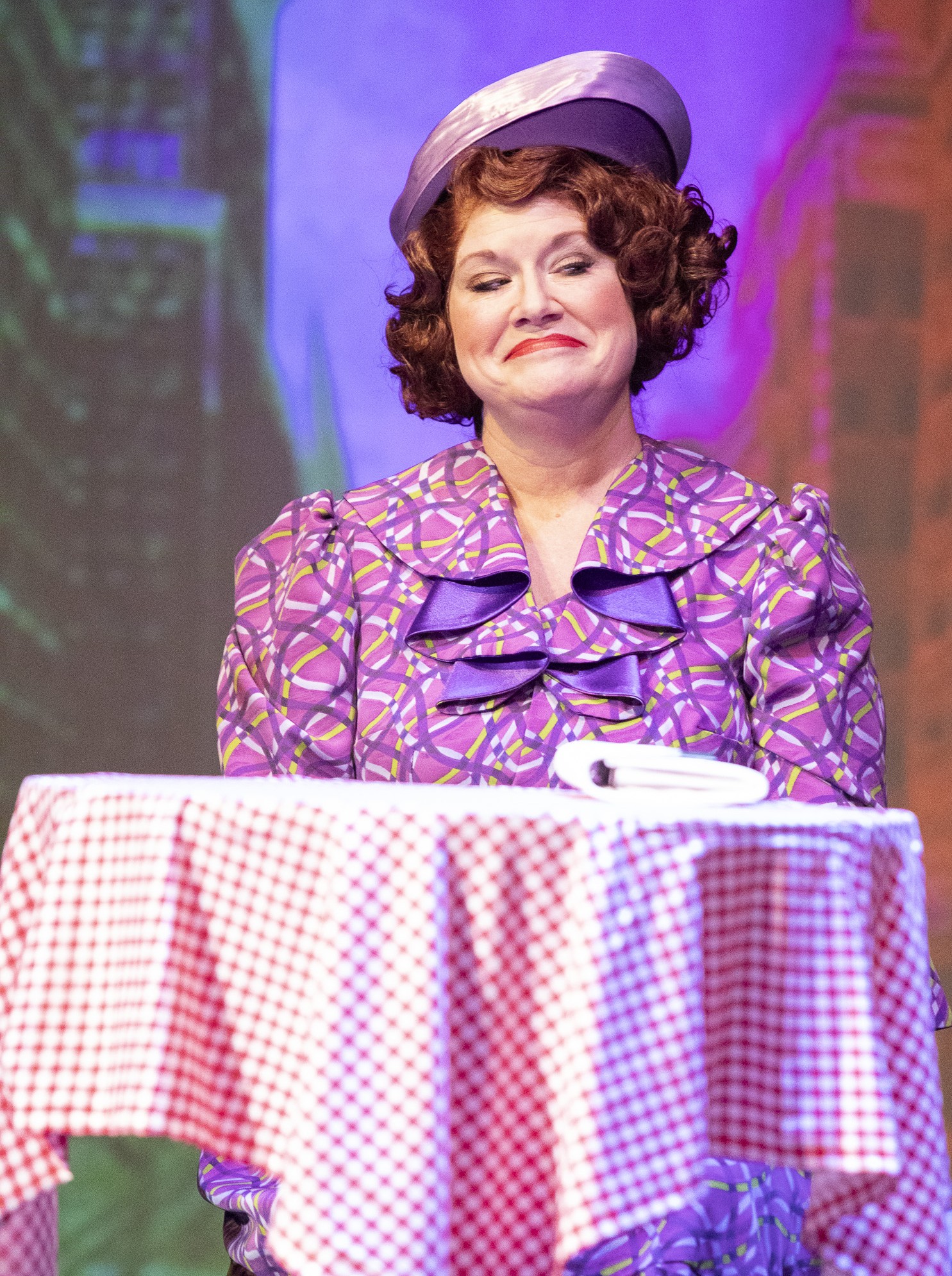
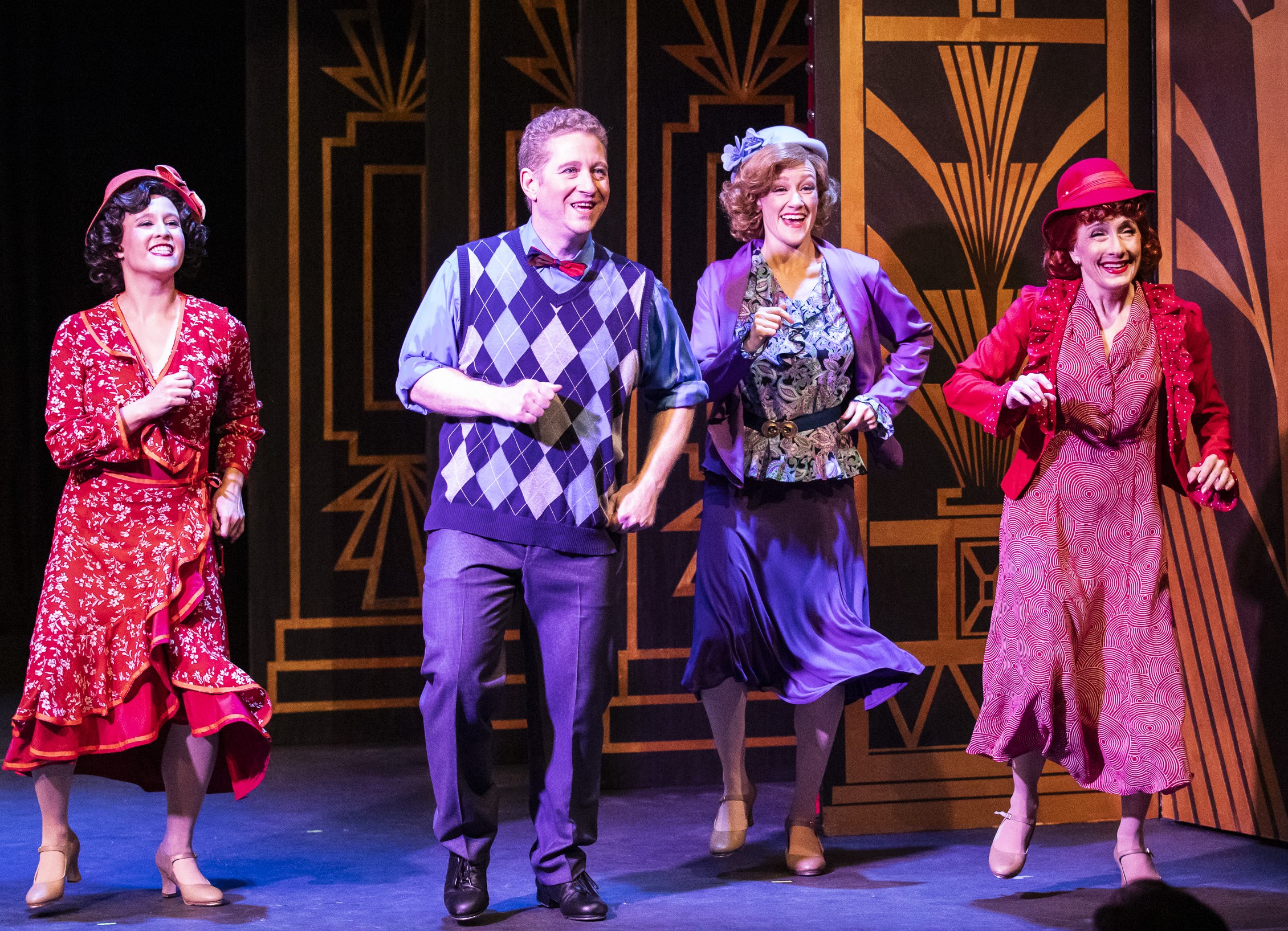
As “Maggie Jones, “Pretty Lady’s” Co-Writer and Comedic Co-Star, Elizabeth A. Bouton Summerer is nothing short of a vortex of comic energy — thanks to her the show (and we, the audience) are lifted to new heights of humor.” In the 1933 cinema original “Jones” was a male, but when he was transforming the story from film to stage in 1980, Director Gower Champion chose to pay homage to his friends from his old MGM dancing days: Adolf Green and Betty Comden (Betty was also renowned for her quick wit and often biting commentary) Hence our “Jones” has been a female ever since. Happily, this gives her character so much more opportunity to shine—and shine Ms. Bouton Summerer most certainly does. Starting with her part leading “Go Into Your Dance”, as she and Chorines: “Anytime” Annie (Alison Boole) “Lorraine” (Holly Weber) and “Phillis” (Amy Cole) take Newbie “Peggy” to lunch during a break in the audition and attempt help her ‘polish up’ some of her moves (–only to be surprised to see she’s actually teaching them!) Then there’s her part opposite professional partner “Bert Barry” (Nick Unquera) during the lively “Getting Out Of Town”, as the whole company of ‘Pretty Lady” prepare to take off on the road for “out of town try outs”; not to be overlooked either is her strong comedic presence post intermission in the midst of “Shuffle Off To Buffalo”. In the same spirit of some of the best comic greats out there Ms. Bouton’s skill can be put very concisely: Short, simple but ever so sincere: her “Maggie” really steals the show (and the audience is all the gladder!) As for her vocal talents, she has a thick, lusty voice which she puts into great service of her part leading “Go Into Your Dance”, “Getting Outa Town”, and later during Act Two, she’s the ‘cynical’ core of “Shuffle Off To Buffalo”==Plus, she can really belt it out to the back of the theater too!

Expanding our attention toward the more ‘technical aspects’ of this production, the first thing you’re likely to notice is the tradition of the playing space’s expansive “Show Drop” that often substitutes for the curtain, and this time here is no different. For this particular show it has always featured a large, flowing image of a gorgeous popular “cheesecake” lass of the day –“The Pretty Lady” the show figuratively revolves around. (In this instance I think she’s one of the saucier pics of Legendary Screen Goddess Rita Hayworth.) Titillating for its time—it’s still fairly eye-catching but remains stolidly family friendly enough for today’s audiences. Then your attention is likely to turn to the rest of the set—courtesy of Set Designers Doug Vasquez and Janine Anderson, Shawn Summerer, and Doug Carlson. Much of it relies on rear projections flashed on the back scrim which not only help place the era, they also make scene changes a snap! What’s more, these projections actually help to add a sense of grandeur to the mid-sized stage (—very handy for all the ‘big’ extravaganza “group” numbers.) Remember this is a ‘Dancers Show’ and many often forget that it’s difficult to successfully dance without equal attention to the music and rhythm and space. Same goes for the lighting gratis Daniel Michener—and boy-oh-boy is there ever a lot of specialty lighting in this one, particularly as it runs the gamut between subtle then strong illumination that is used to break down and isolate (or highlight) smaller sections of the stage to indicate more intimate areas for characters during more intimate “Backstage” moments; contrarily, he also (frequently) does the opposite by bathing the entire stage (and regions just yonder for those large robust full-cast “Show Biz” interludes. This is one vital way to inform the audience that something very important (or entertaining) is taking place. These distinctions indicated through illumination are part of the allure of live theater–and in these cases here in Mitchner’s charge, they are wrought with great insight and distinction!
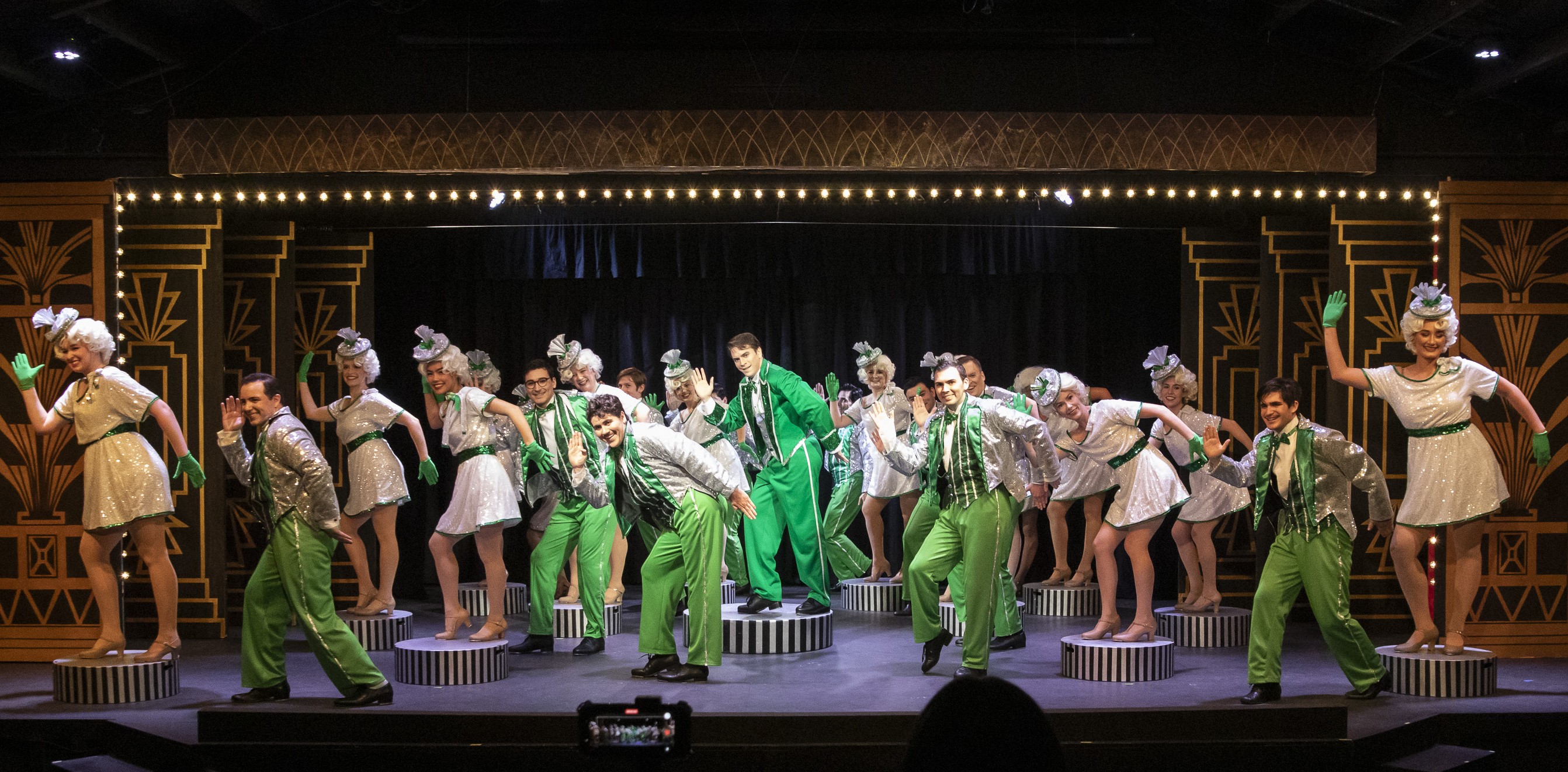
“They’re side by side– they’re glorified, where the underworld can meet the elite, –“Forty-Second Street”! This is a “Buck And Wing” version of a Love Letter” to resilience, taking a chance on yourself, and the age-old intoxication dream of “Making It Big” unlike any other. So “If you’ve got a melancholy case of the blues—they’ve got a melody for you!” As the lights “twinkle and shine”–and the Kentwood Player-Dancers housed in the historic Westchester Playhouse in Los Angeles California take to the stage for that famous large scale opening “Audition” sequence they are inviting us to let go, lean in, and be swept utterly away in a magic that for them has lasted 75 years! These are the Go-Getters in “Capezio’s”, “Bloch’s”, and “Millers and Ben’s” who make “42nd Street” really endure; not just its blend of off-the-wall comedy, iconic choreography or unforgettable score, it is every performer’s belief that theater can lift us, unite us, and remind us of the unique enchantment that happens when the curtain rises (and honestly, couldn’t we all use that right now?!) Having opened Friday November 14th , “42nd Street” is set to play through December 13th, 2025, at “The Westchester Playhouse” located at 8301 Hindry Avenue in Los Angeles CA Showtimes are Fridays and Saturdays at 8:00 PM, with Saturday and Sunday Matinees at 2:00 PM. Tickets may be obtained online at www.kentwoodplayers.org , by emailing the box office at boxoffice@kentwoodplayers.org , or calling (310) 645-5156.(Special Discounted Tickets for Seniors, Students & Military are available for this engagement.)
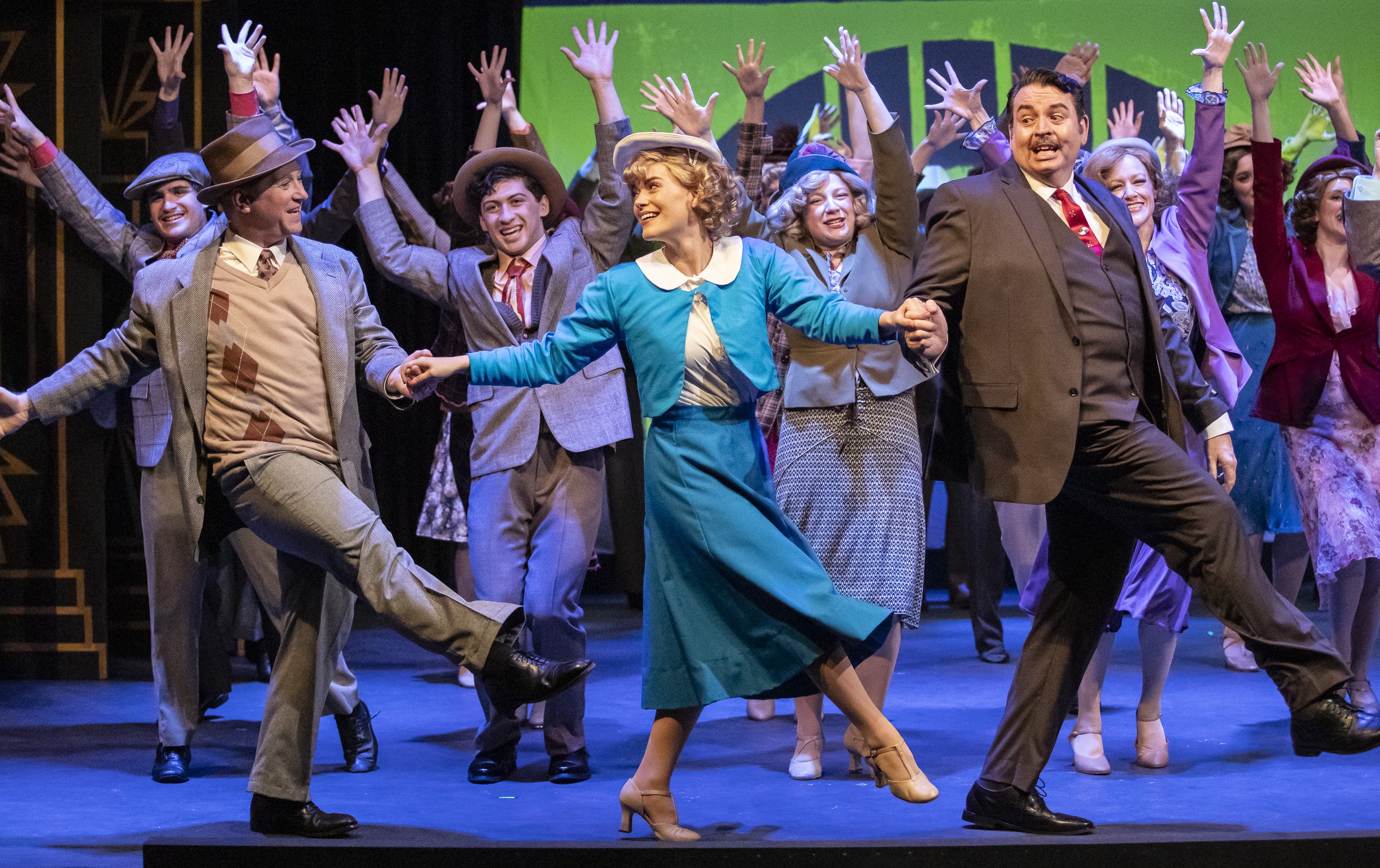
Production Stills by Gloria Ramirez Plunkett, Courtesy Of “The Kentwood Players”; Special Thanks To Doug Vasquez, Margaret Harrington, Catherine Rahm, Ben Lupejkis And To The Cast And Crew Of “The Kentwood Players” 2025 Production Of “42nd Street” For Making This Story Possible.
 Buck-ing Trends