“Mama who bore me—Mama who gave me, no way to handle things which made me so bad…”
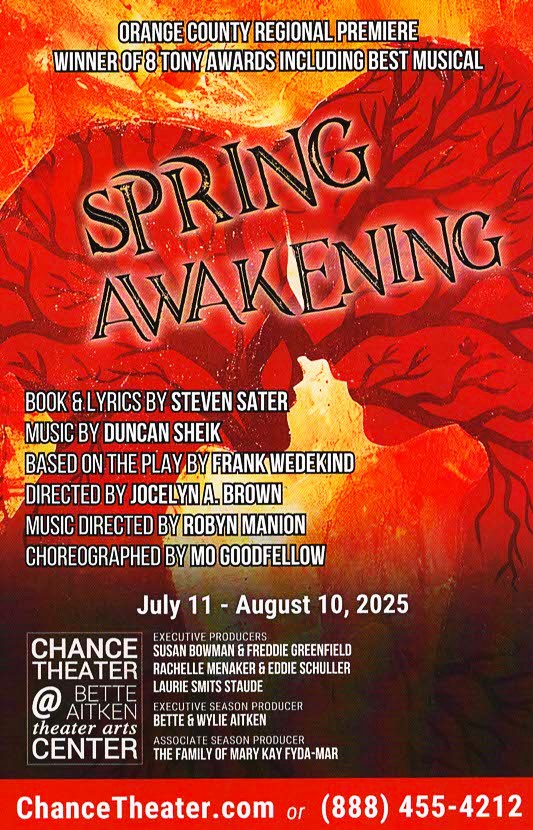
…Thus are heard the opening lines of “Spring Awakening”–succinctly “sizing up” all of the confusion, conundrums and challenges endured by a circle of “facing-adolescence-without-a-clue” teens who are naturally unsure about themselves and their encounters–and what it’s doing to them. Initially debuting as a controversial 1891 Novel by German Author Frank Wedekind who later adapted it into a stage play. Delving into themes of adolescent sexual awakening, youth rebellion (even if just via daring to ask questions) and self-discovery among a cluster of late 19th-century German students, over a century later, the story was further adapted into a riveting rock opera with music by Duncan Sheik and a book and lyrics by Steven Slater. Next opening on Broadway in December of 2006 it went on to win eight “Tony Awards”–including “Best Musical”, “Best Book”, “Best Score”, “Best Choreography”, and “Best Direction”. Now, the skilled team at the Chance Theater in Anaheim California invite audiences to return to the Victorian era having illuminated the summer season with their own take on this must-see modern-day classic that asks: What happens when young people are silenced (–and what happens when they finally get the opportunity to express their deepest thoughts, drives and feelings through song?)
Wedekind’s groundbreaking and controversial play (paradoxically, once banned in Germany), benefits greatly from Sater and Sheik’s re-envisioning boasting a brilliant rock score and searingly emotional libretto which follows several young people (—most of them classmates) each experiencing the emotional trials and physical turbulence we all go through as part of “growing up”. The catch? None of these kids have been told by the adults around them exactly what’s happening to them and what they can expect. Given this understanding one can easily guess that any “awakening” each is undergoing will surely be a rude one! At times, playing like an all-out “Rock Operetta”, it’s little wonder that Sheik’s driving alt-rock score and Steven Sater’s lyrical, aching (and heart-breaking) text has since earned the show the same status and notoriety of such other giants in the Contemporary Musical Pantheon as “The Who’s Tommy”, Green Day’s “American Idiot”, “Grease”, “Rent” and even “Million Dollar Quartet”.
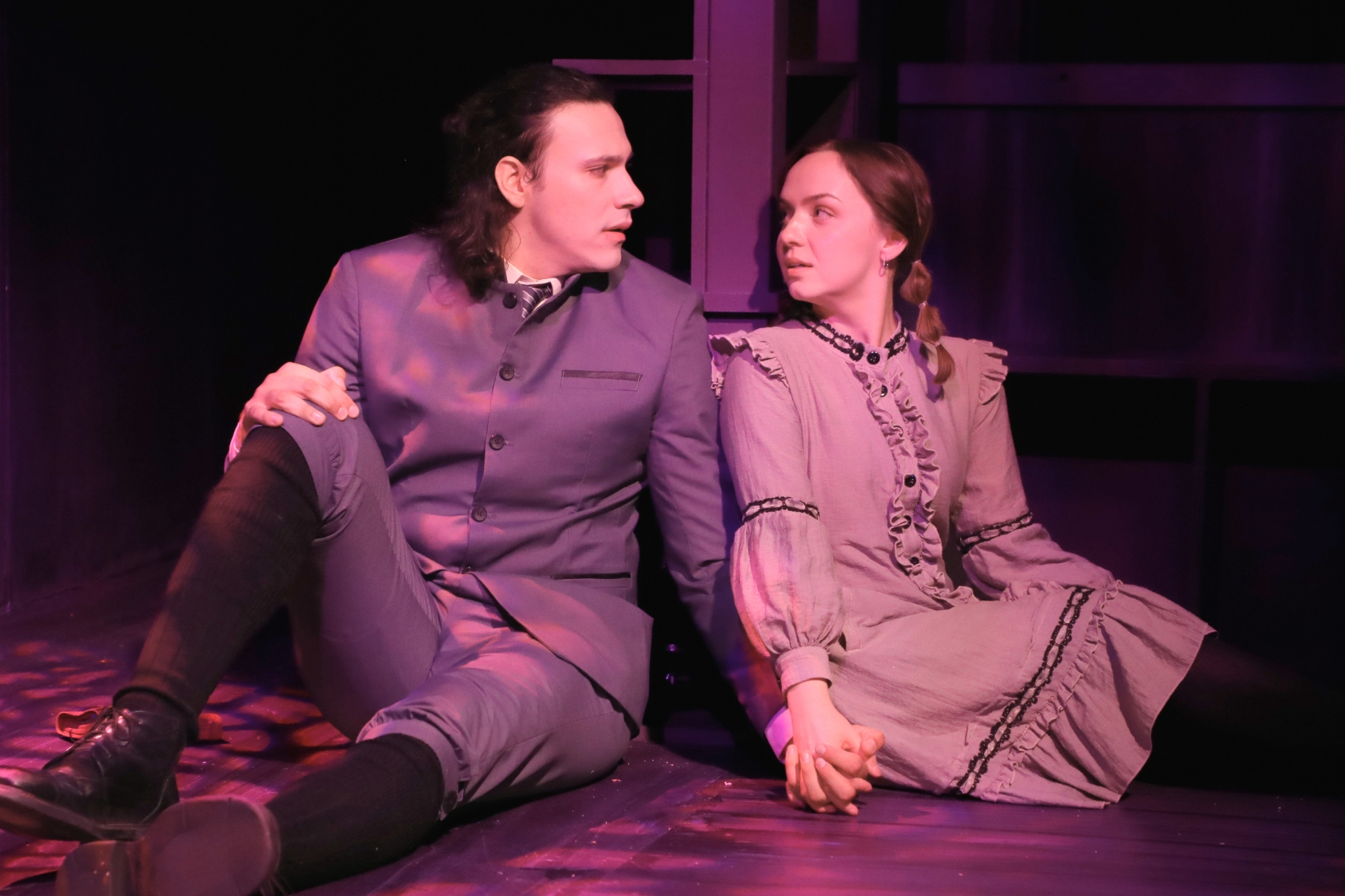
As their bittersweet tale commences, we play witness to this rag-tag collection of yesteryear’s’ hapless younger generation as they all navigate the challenges and costs an ignorant adolescence in a repressive society can have, and the devastation it can bring about. Along the way, highlighted are their struggles with authority, societal expectations, and the potential hazards of their fast emerging desires. The story follows a assemblage of youthful characters like “Melchior Gabor”, a headstrong, free-thinking, high-spirited (but very handsome and popular) student, and “Wendla Bergmann”, a young girl grappling with her emerging sexuality, along with their “outcast” friend “Moritz Steifel”, a somewhat innocent and scholastically less-than-bright (—but very good natured and relatable) misfit who turns out to be the most tragic of all those we’ll meet. As the plot unfolds, Moritz has eagerly digested the rather intimate (complete with drawings!) “essay” that his pal Melchior prepared for him, only to complain that his new knowledge has only made his frustrated dreams even more vivid and torturous. Melchior tries to calm and comfort his friend, but Moritz runs off in frustration. Later all of the boys and girls express their own desires for physical intimacy in songs like “Touch Me” and “The Bitch Of Living”. The score’s most iconic selection: “The Song of The Purple Summer” is saved for the finale but is soooo worth waiting for. Indeed, back in the early years of our own Millenium when the musical debuted, this self-same song quickly became something of an Anthem for Generations X and Y who themselves came of age in that decade.

Blessed with a dynamic troupe of bona-fide triple-threat performers, this rendering, directed by Associate Artistic Director at the “Chance” Jocelyn A. Brown, marks a homecoming of sorts for Ms. Brown who directed the original Spring Awakening non-musical play on the exact same stage over 20 years ago. She returns now having re-imagined this hit musical adaptation—and joyously, she handles this lofty task with dexterity and assurance. Consequently, So Cal audiences are given still another reason to value their little performance venue in Anaheim as the grand, sparkling theatrical prize that it is! Director Brown really brings out the pathos inherent to each character and the performances that bring them to life across the Chance stage. Watching Ms. Brown’s overall “take” on the story, one gets the distinct impression that these kids are expendable; yet when whatever dire fates are in the cards for them does at last unfold, it’s nothing less than devastating. Choreographed by Mo Goodfellow, Ms. Goodfellow’s dance segments, while also rhythmic and exciting, are also well, groovin’! Moreover, what really makes them stand out is how every so often they can ‘sneak up on you’ where they are enhanced and emphasized by dazzling arm and frenetic hand motions. Indisputably, all the flashy moves she’s chosen (and where) really punctuate a good lyric or downbeat here.
Working conjointly, the ensemble’s sheer energy is both magnetic and melodic, with voices and instruments blending seamlessly. Numbers like “Those You’ve Known” and “Totally F****d” (–Yeah, you just knew I had to mention this one—but it truly is a surprise mood-lifter in Act Two–) expertly showcase not only the cast’s vocal talent but also their vulnerability. Beyond offering a new perspective on the story, the cast members play multiple roles, including providing live musical accompaniment throughout the show. Their musicianship is particularly evident when, at the end of Act One, the entire cast comes together to perform with a range of instruments. But the fundamental “awesomeness” to this particular production doesn’t end there—far from it!
As “Wendla Bergmann”, Kayley Stallings exudes a solid compassion-worthy quality that has us in her corner right from the get-go. In this role, Miss Stallings gives “Wendla” an exemplary wide-eyed guileless appeal and has a beautiful and hardy voice to follow through with it! When she first appears at the show’s commencement, “Wendla” is puzzling over her attempt to wear a sailor-suit (clearly designed for a much younger lass) only to realize that what was her favourite dress last summer is now too tightly fit. As her mother explains, she’s much too ‘grown’ for such ‘childish’ garb. We know why this is so—the real sin is, she doesn’t (because ‘Mother” has yet to tell her daughter why girls grow –and what parts of them begin the process!) Such is the genius of this script—it presents plenty of examples that spectators know the significance of, yet these poor protagonists are too ‘ingenuously’ unaware of themselves. At the heart of the action is Corydon Melgoza as “Melchior Gabor,” the central figure of “Wendla’s” girlish admiration. Melgoza’s depiction of “Melchior” (or simply “Milky” as his friends call him) is marked by an enviably commanding stage presence, distinguished vocal ability, and a towering charisma—qualities essential for a character like this who drives the narrative and figures in to much of its underlying repercussions! Melgoza also provides a sincere and nuanced delivery in several emotionally charged scenes which further underscores Melchior’s pivotal role, while his dynamic (and sometimes contrary) interactions with the “adults’ further accentuate his impact as both an Actor and Singer.
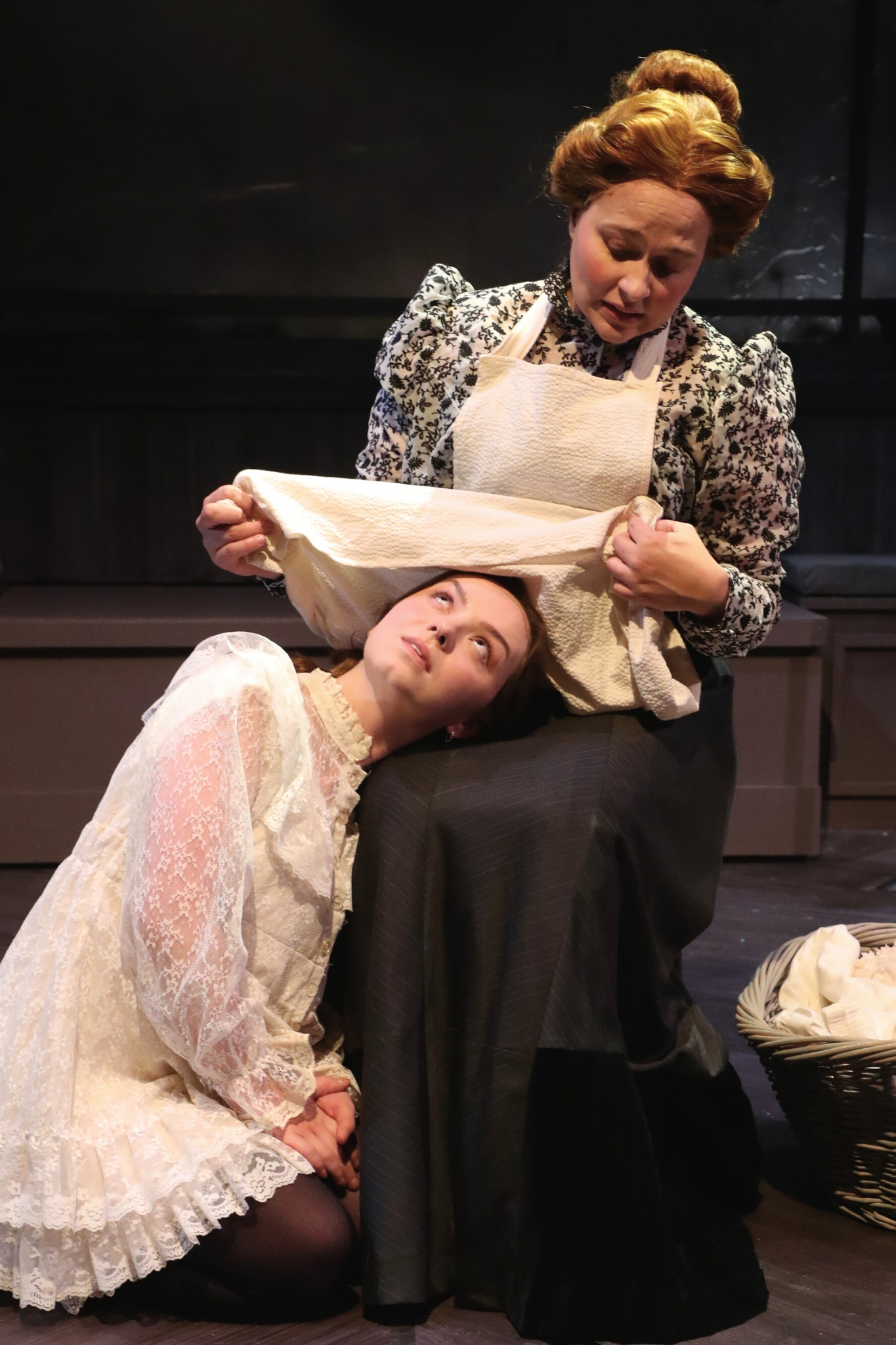
Meanwhile, portrayed by Brody Tarrant Sitton is “Moritz Steifel”—referred to by his classmates as “A sad and soulful sleepyhead”. Sitton’s “Moritz’ is deeply repressed and supremely stressed by his constant—hormonal—obsession with the opposite sex (–and not understanding any of it!) Brody invests “Moritz” with just the right touches of guilelessness and geekiness—after all, “Moritz” is more simply an outcast than anything else. He isn’t “hip” or “with it” (or whatever the 1890’s versions of those were,) so even the school faculty berate, marginalize—even ‘victimize’ him. While this could be the fodder for plenty of lighthearted, even slightly ribald comedy, that, however, is another show entirely! Mr. Sitton augments his character with his Gold-Medal voice that not only sounds delightful to hear, it gives even the more supposed ‘blithesome’ lyrics he’s singing, a depth and pleasant quality—often in direct contrast with the mental duress this lad is enduring. Remarkable as well is “Ilse Neumann” played by Isabella Kaplan. A guitar playing runaway “Ilsa” is reputed (by her one-time classmates) to be the “cool ‘bad girl’ who took off to live in a nearby ‘Artist’s Colony’ (trouble is no one thinks to ask WHY she left home only to find the bohemian band she sought shelter with were just as debauched and threatening as what she ran-away from!) “Ilse” is probably one of the most anguish-inducing characters ever to appear in a musical. Ironically, this is what makes her performance so potent and unforgettable! What’s more Ms. Kaplan also has terrific dexterity with a guitar as she furnishes phrase after phrase of soulful riffs to many of the group endeavors and even some of the solo pieces. Teamed with Mr. Sitton, they share an absolutely top-flight duet (one of the ‘hits’ the score can boast) in “I Don’t Do Sadness/Blue Wind”. This ode to ‘Innocence Annihilated’ shared twixt these two forlorn characters could be counted as one of the show’s highest highpoints.
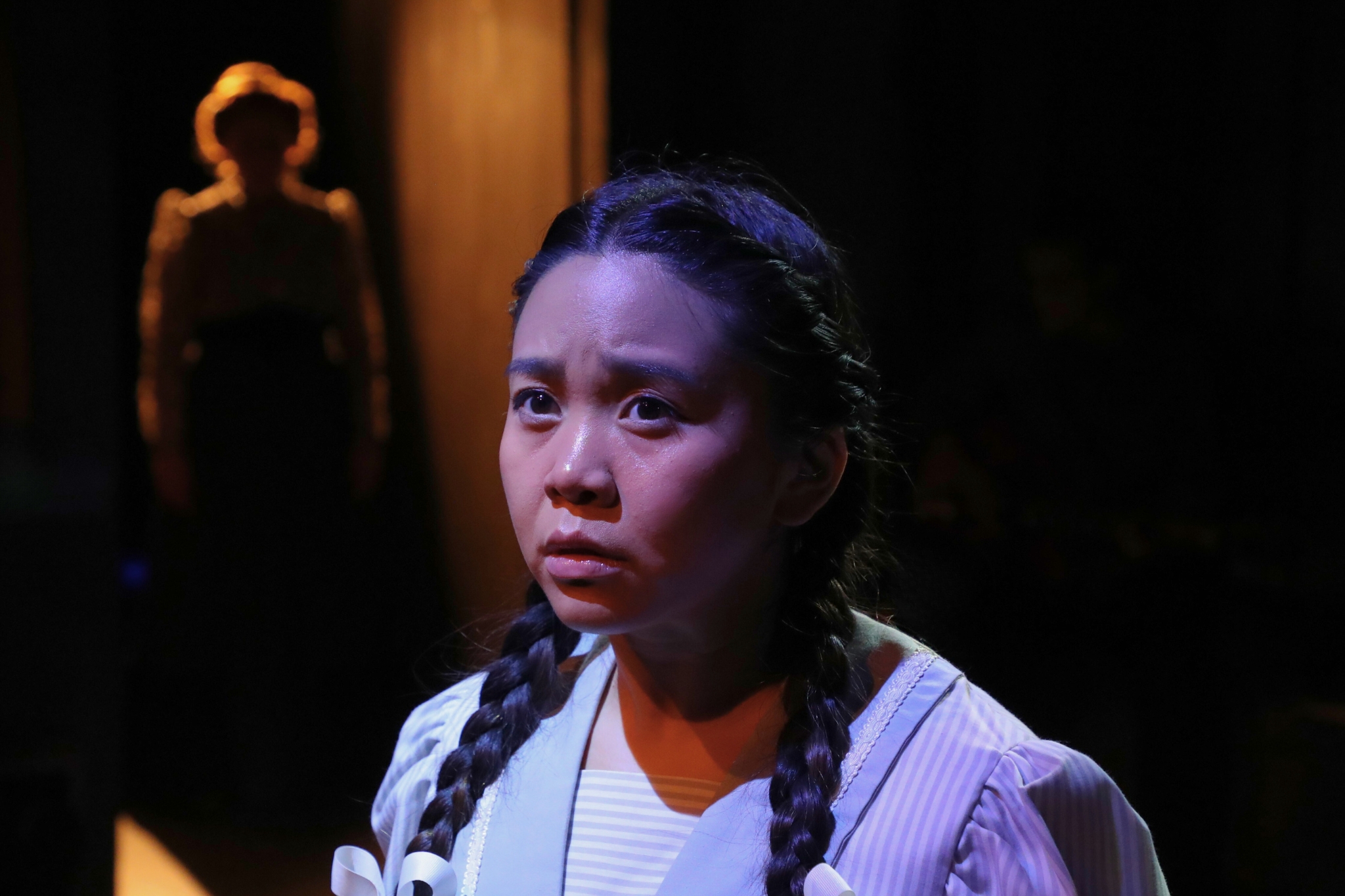
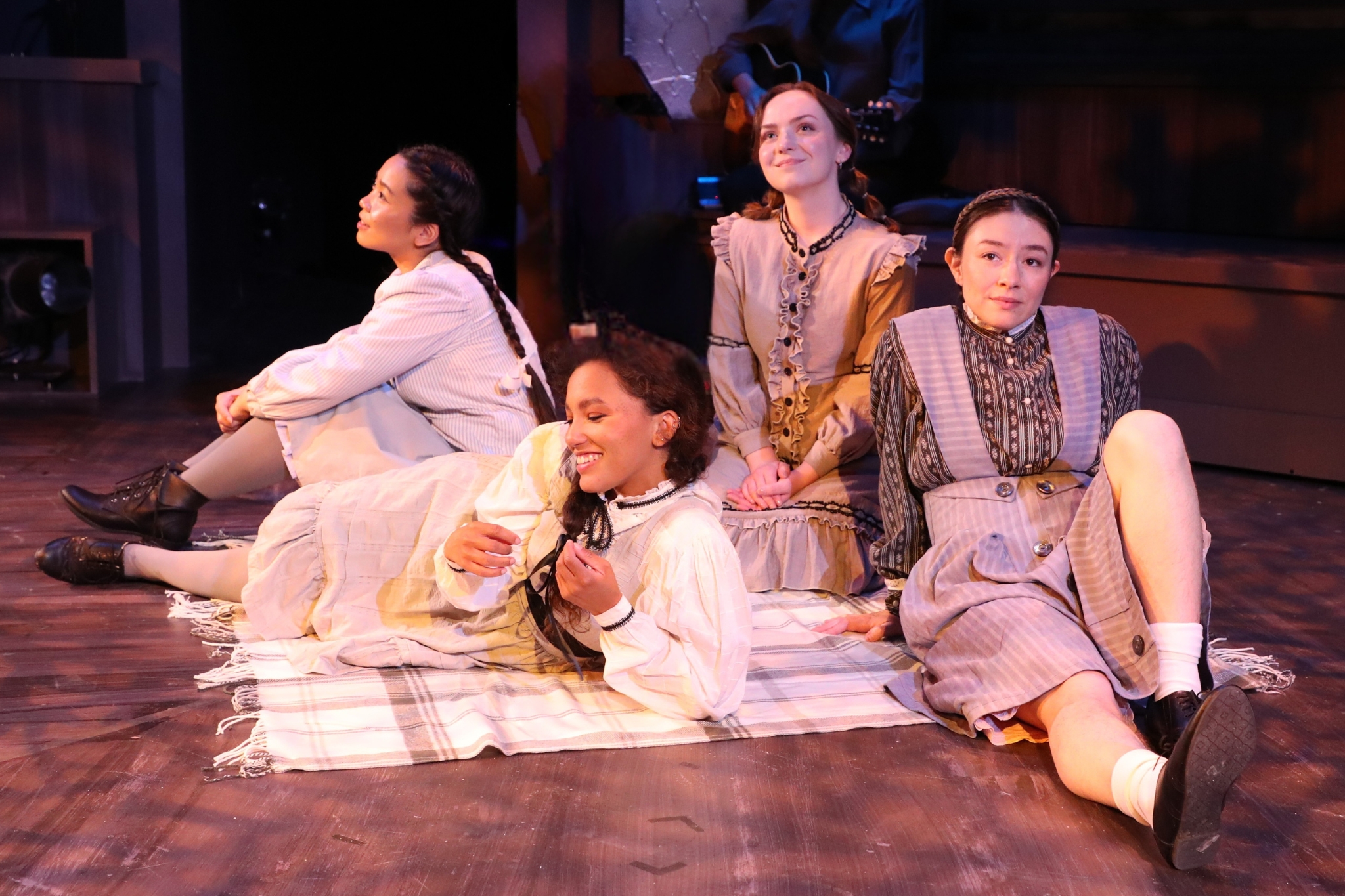
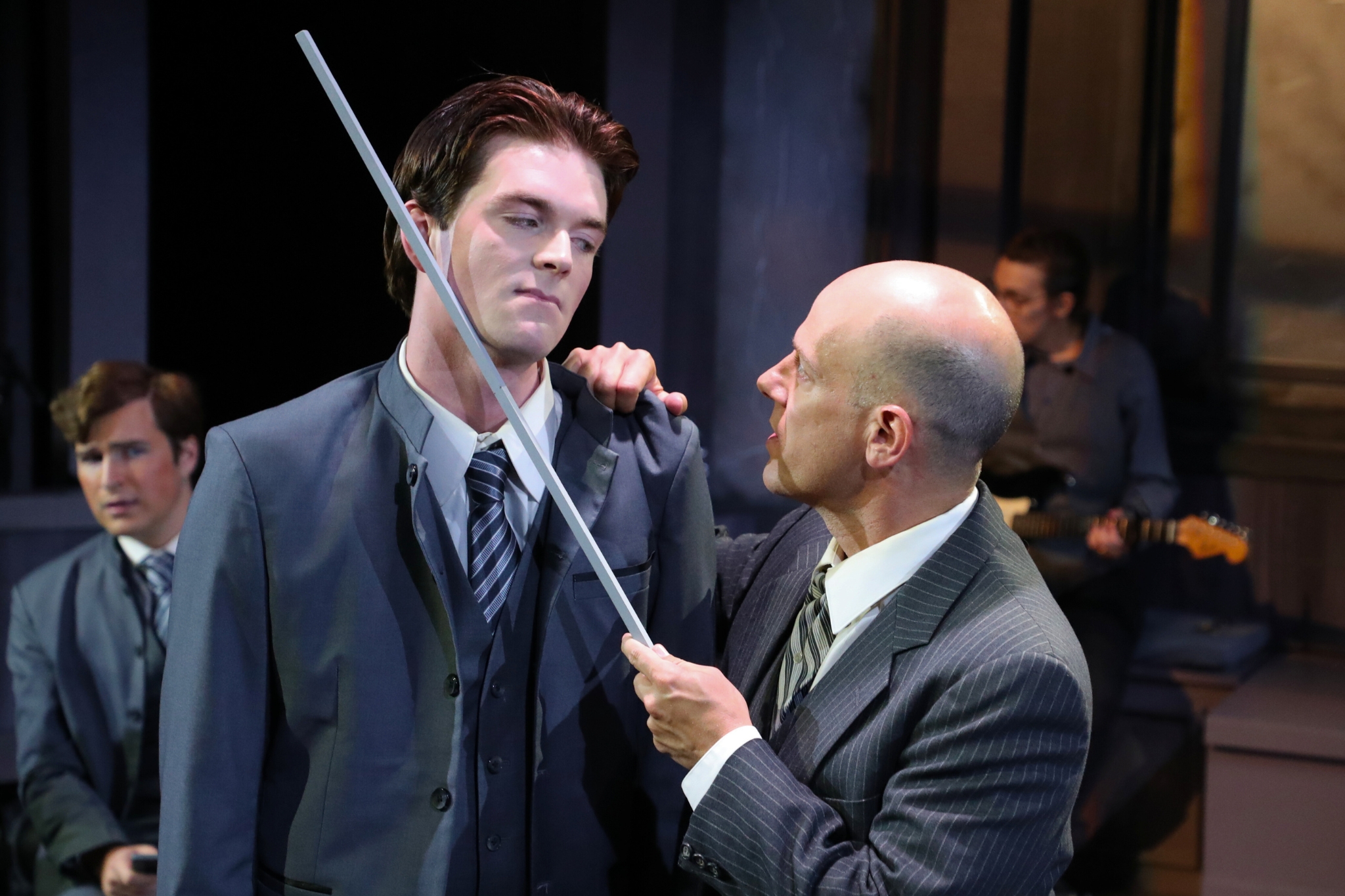
Emma Magbanua also bestows a fine characterization as “Martha Bessel”—another one of “Wendela’s” closest friends (—but with a secret of her own!) “Martha Bessel is beaten almost every evening. The next day you can see the welts,” Wendla discloses of her friend; “It’s terrible.” In the number, “The Dark I Know Well”, which she shares with Ms. Kaplan, Ms. Magbanua sings of what is euphemistically called “Story Time” –the unspeakable bedtime desecrations none dare reveal: “I don’t scream,” “Ilse” chokes describing to the other girls why she beat a hasty retreat. “Though I know it’s wrong I just play along. I lie there and breathe…lie there and breathe!” (In this lyric ‘post-script she adds dejectedly: “Me and my “beauty“!”) Yes, it’s a tough subject to be expressed in song, but each performer delivers it with breathtaking empathy. Alongside the younger cast, let’s not overlook the “Grown Ups” in the story either! Here, the Parents, Teachers and Clergy are the true Bullies, and “Spring Awakening” maintains the unique casting device that has one man play all the “Adult Males” and one woman play all the “Ladies”. These tasks fall to James Michael McHale and Erica Farnsworth respectively, who each shoulder the responsibility of portraying every authority figure in our students’ world—from teachers to parents, to clergy, and McHale and Farnsworth shift between these roles and personas effortlessly. Additionally, their performances serve as both comedic relief and somber reminders of the kids’ “Elders” pervasive influence, often marked by inflexibility, ignorance, willful denial, or downright abuse. To their utmost credit, this pair embody an entire generation’s institutional rigidity, underscoring the central tragedy: guidance and knowledge withheld, curiosity punished, and individuality suppressed.
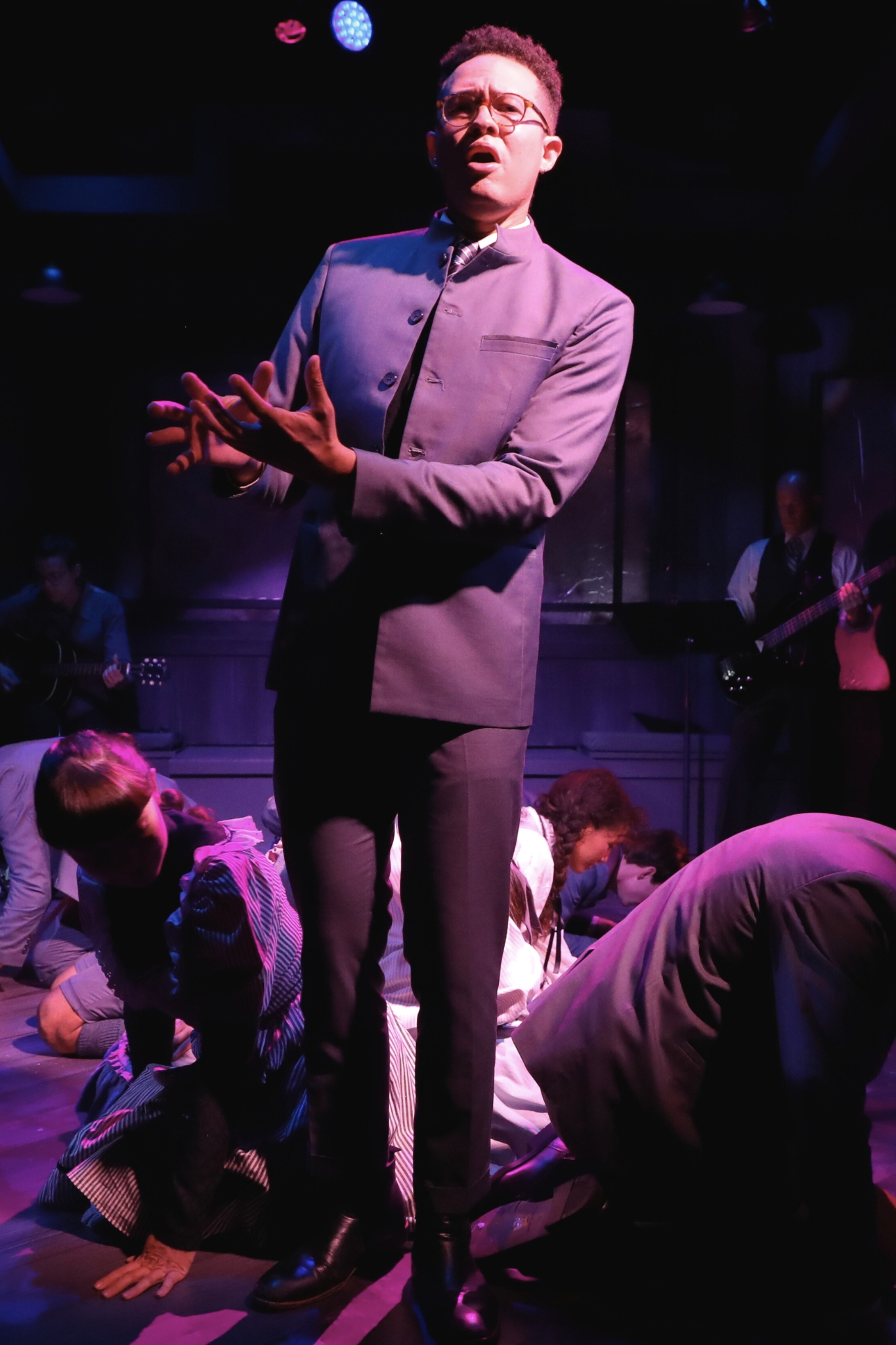
From a purely “technical” aspect, once again those at “The Chance” lead the way in preparing a functionally sophisticated stage whose elements never blatantly call attention to themselves but still add immensely to the show’s overall “amazement quotient”. Exploring the unique charms of ashen grays and browns, Bradley Kaye’s Scenic Design has conjured a cozy little playing space which, at first glance, may be perceived as a little drab and generic “in door” staging area and backdrop—but look again: That’s what makes it all so inventive. Houses, Schoolrooms, Offices, Outdoors and at one key point even a hayloft in a barn! It can be anything or anywhere each scenario requires while still affording us with a quiet, bucolic stateliness. Aiding and expanding his work is Lighting Designer Jacqueline Malenke’s vibrantly colorful lighting plot, which makes daring use of often underused hues like maroons and violets. These damask colors actually make the spotlights (and those in them) “shine” all the stronger, while in the more ‘intimate’ scenes the shadows they cast add a deeper resonance—sometimes alluring, at others foreboding. Costumer Bradley Allen Lock similarly works fashion magic once again with all his Pre-1900 regalia—quite often making the subdued cotton attire so characteristic to the period seem so much more eye-catching in both subtle and not-so subtle ways. Remember, this was a time and a culture where young men were pressed into stiff celluloid collars and dreary button-down blazer-jackets and pallid, colorless short-pants while young ‘ladies’ were clad in simple cotton dresses worn under dowdy white (sometimes calico patterned) pinafores. Observing Locks’ choices gives even those who aren’t fashion-history savvy the distinct impression that he hasn’t put a foot wrong with his fashion picks or their authenticity.
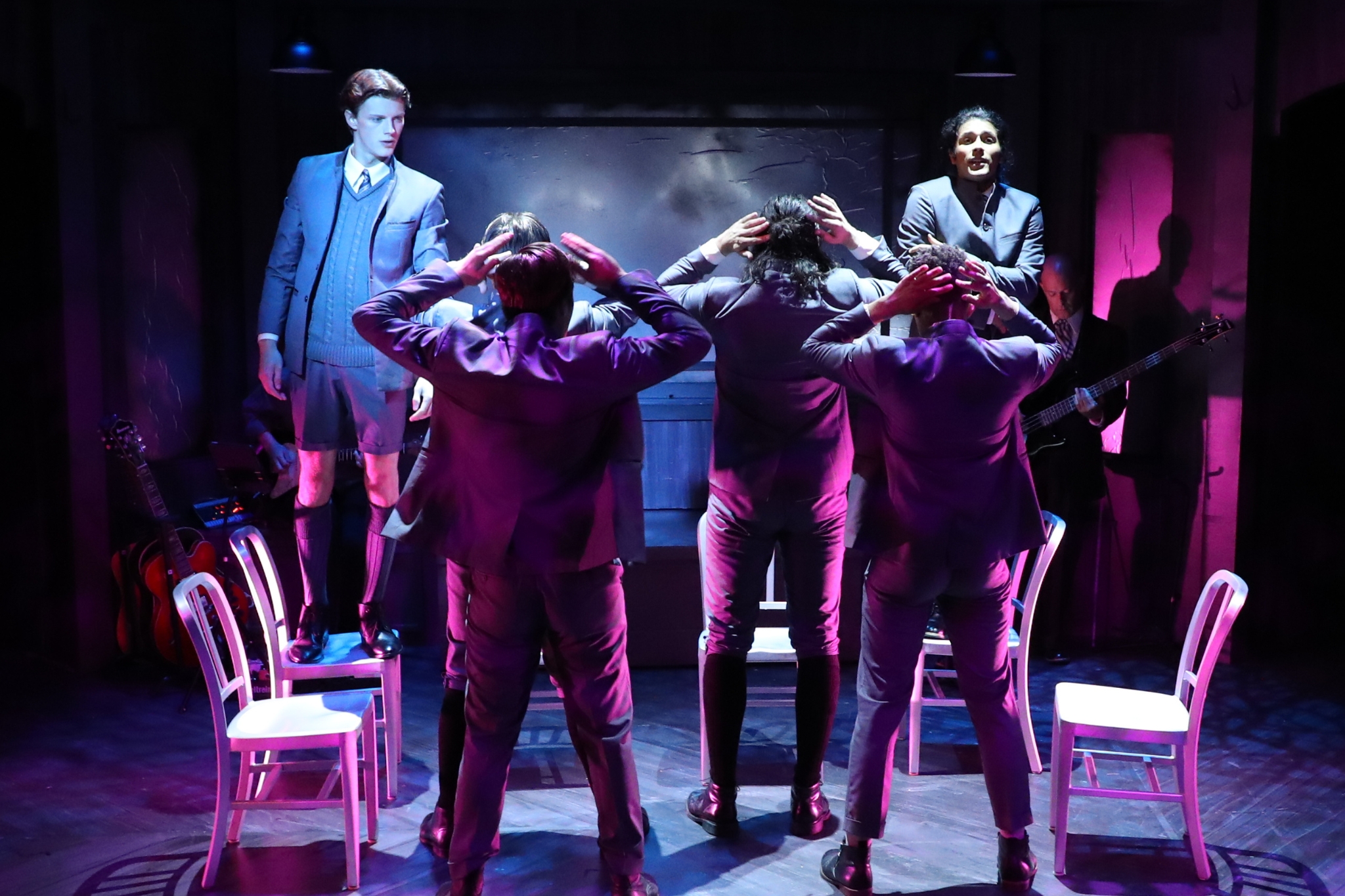
In spite of much of the PG-13 material the show contains, (and is arguably famous for) it deserves also to be said that Ms. Brown, her cast–and everyone involved at “The Chance”, have presented a thoughtful, entertaining and wholly dignified production. If you’re a fan of thought-provoking—Mature–theater brought to life through captivating and soulful music, this production is not to be missed! Having officially opened on Saturday, July 19th, 2025 “Spring Awakening” is slated to run through Sunday August 10th, 2025, on the “Cripe Stage” of the “Chance Theater @ The Bette Aiken Theater Arts Center” located at 5522 E. La Palma Avenue, Anaheim, Ca. 92807. Showtimes are Thursdays at 7:30 PM, Friday and Saturday evenings at 8:00 PM, with Saturday and Sunday Matinees at 3:00 PM. Tickets may be obtained on-line by logging onto: http://www.ChanceTheater.com/SpringAwakening or via phone by calling: (888) 455-4212.
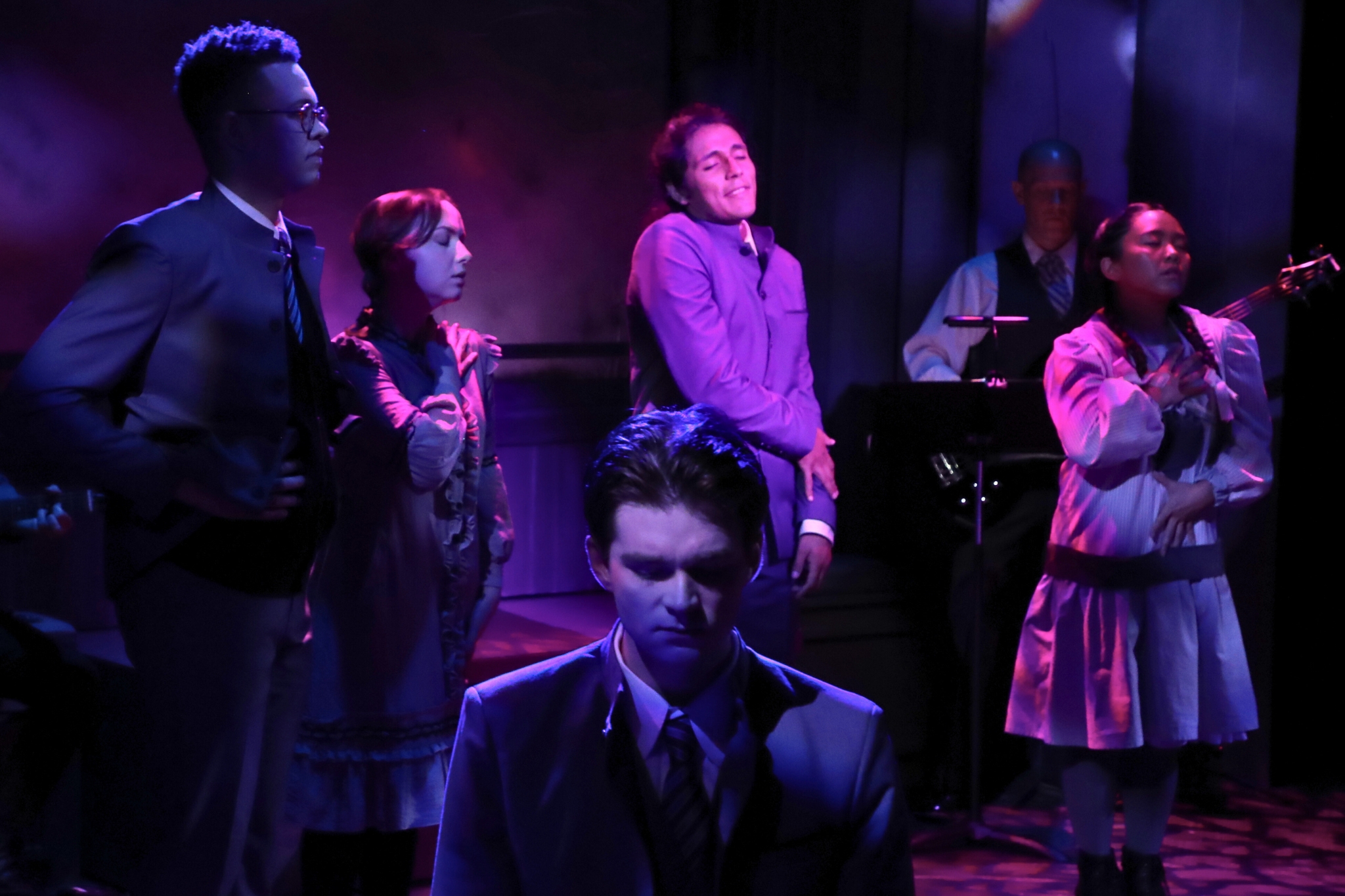
All Photos by Doug Catiller, True Image Studio (https://trueimagestudio.com) Courtesy Of “The Chance Theater” (http://www.ChanceTheater.com) Special Thanks To Oanh Nguyen, Shin-Shin Yuder Tsai, Bette & Wylie Aitken, Jocelyn A. Brown, Mo Goodfellow, Robyn Manion, And To The Cast & Crew Of “The Chance Theater’s” 2025 Production Of “Spring Awakening” For Making This Story Possible.
 Buck-ing Trends
One thought on “‘Purple Summer’ Is Here At Last: Anaheim’s’ “Chance Theater’s” “Spring Awakening” Is A Master Stroke That’s Anything-BUT-Sophomoric!”